





One Fast Machine vs Two Flexible Machines: Which Scales Better?
Table of Contents
Key takeaway:
Scaling production is usually about increasing usable uptime, not maximum speed. For many manufacturers, adding flexible capacity delivers more predictable growth than investing in a single, faster pick and place machine.
Why This Decision Comes Up During Growth
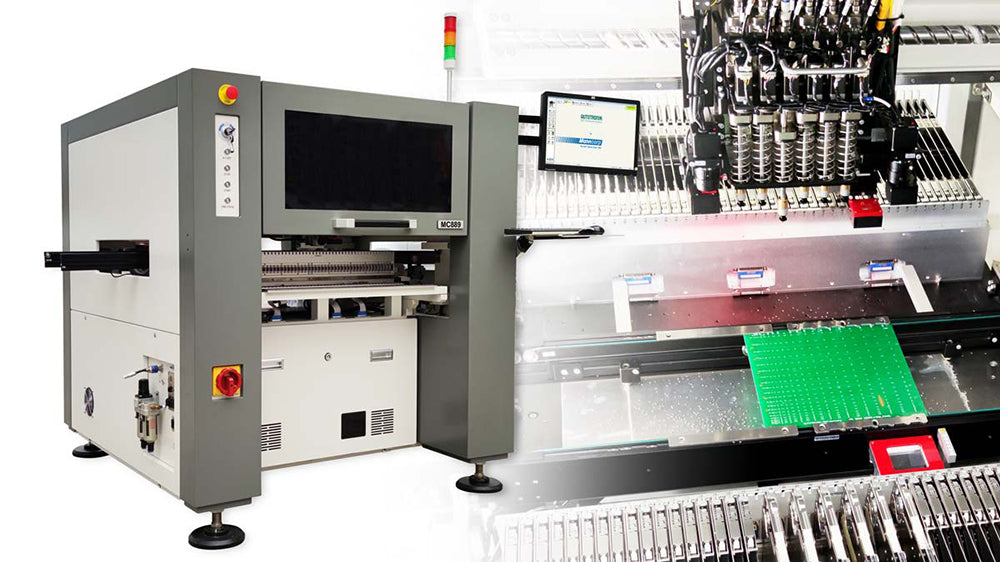
As volumes increase, manufacturers often reach a point where their original setup no longer feels comfortable. Orders pile up, schedules tighten, and small disruptions have outsized effects.
At that moment, the question becomes less about whether to add capacity and more about how to add it:
- Do you consolidate output into one faster pick and place machine?
- Or do you spread work across multiple flexible platforms?
The right answer depends on how stable your products, schedules, and staffing really are.
This page supports the From Starter SMT Line to High-Speed Production: A Practical Path for Scaling Electronics Assembly guide.
What a Single Fast Machine Does Well
A single high-speed or speed-optimized pick and place machine performs best when production conditions are controlled.
This approach works well if:
- Products are finalized and rarely change
- Builds are long and predictable
- Changeovers are infrequent and well rehearsed
- Preventive maintenance can be tightly scheduled
Under these conditions, speed compounds efficiently. Setup time becomes a smaller fraction of total runtime, and throughput gains are easy to forecast.
Where One Fast Machine Creates Risk
In mixed production environments, much of the risk of relying on a single fast machine comes from long or disruptive setups, which is why changeover time often matters more than placement speed as volume and mix increase.
As product mix or scheduling pressure increases, the drawbacks of a single fast machine become more visible.
Common challenges include:
- Single point of failure: Any issue stops all placement
- High-impact changeovers: Every setup interrupts total output
- Scheduling fragility: Urgent jobs displace planned runs
- Capital concentration: A large investment tied to one workflow
When demand fluctuates or priorities shift, these risks can slow growth instead of enabling it.
Why Two Flexible Pick & Place Machines Often Scale Better
Two flexible machines don’t necessarily double output, but they often make output more reliable.
With parallel capacity:
- Jobs can be staged instead of rushed
- Prototypes can run without interrupting production
- Changeovers happen without stopping the entire line
- Maintenance or troubleshooting affects only part of the operation
This structure absorbs variability more gracefully, which is often more valuable than peak speed.
Throughput vs Uptime: The Real Scaling Tradeoff
A faster machine increases theoretical throughput.
A second machine increases available runtime.
In many real-world environments—especially high-mix—runtime is the limiting factor. Even modest downtime, setup delays, or scheduling conflicts can erase the advantage of higher speed.
Parallel capacity protects uptime by ensuring that not all output depends on a single machine being available at all times.
Changeover Behavior at Scale
As production grows, changeovers become more frequent and more consequential.
With one fast machine:
- Changeovers pause all output
- Setup errors are costly
- Operators feel pressure to rush transitions
With two flexible machines:
- One machine can change over while the other runs
- Setups are calmer and more consistent
- Scheduling has more room to breathe
Over time, this leads to more predictable output and fewer quality issues.
Staffing and Skill Considerations
Scaling with one fast machine often concentrates operational knowledge:
- Fewer people know the system deeply
- Absences or turnover carry more risk
Two flexible machines distribute responsibility:
- More operators can be trained
- Knowledge is less siloed
- The operation becomes more resilient
This matters more as teams grow or shift.
A Common Growth Path That Works
As volumes stabilize, many manufacturers choose to add parallel capacity rather than replace existing equipment, often evaluating mid-speed platforms to absorb repeat production without sacrificing flexibility.
Many manufacturers follow a measured progression:
- Start with a flexible platform for mixed builds
- Improve feeder strategy and changeover efficiency
- Add a second flexible or mid-speed machine as volume increases
- Assign work based on mix, urgency, and stability
This approach grows capacity while preserving adaptability.
When One Fast Machine Does Make Sense
A single fast machine is often the right choice when:
- Product mix is low
- Volumes are high and consistent
- Changeovers are rare and controlled
- Downtime risk is acceptable
In these cases, speed is fully utilized and complexity stays low.
Visual Comparison: One Fast Machine vs Two Flexible Machines
Scaling Output in Real Production Conditions
|
One Fast Machine |
Two Flexible Machines |
|
|
Placement speed (CPH) |
Very high |
Moderate (per machine) |
|
Total usable uptime |
Dependent on one system |
Distributed across machines |
|
Changeover impact |
Stops all production |
Affects only one machine |
|
Ability to run mixed jobs |
Limited |
Strong |
|
Prototype interference |
High risk |
Low risk |
|
Downtime risk |
Single point of failure |
Built-in redundancy |
|
Scheduling flexibility |
Low |
High |
|
Scaling behavior |
Step-change, rigid |
Incremental, resilient |
| Key insight | High placement speed, but downtime, changeovers, or urgent jobs stop all output. |
Output is distributed. One machine can run while the other changes over or supports prototypes. |
In high-mix or evolving production environments, parallel flexible capacity often delivers more usable output than concentrating speed in a single machine.
The Takeaway in Practice
Scaling isn’t just about placing more parts per hour—it’s about keeping production moving as conditions change.
For many manufacturers, two flexible pick and place machines scale more smoothly than one chipshooter because they reduce risk, protect uptime, and adapt better to real-world variability.
Speed is powerful. Flexibility is durable.
Next Step: Evaluate How Your Line Actually Scales
If you’re deciding between upgrading speed or adding flexible capacity, a BOM-based analysis can help identify where your real constraints lie. You can send your BOM and production details for a free equipment recommendation, or talk with our team about structuring capacity to support both growth and variability.


